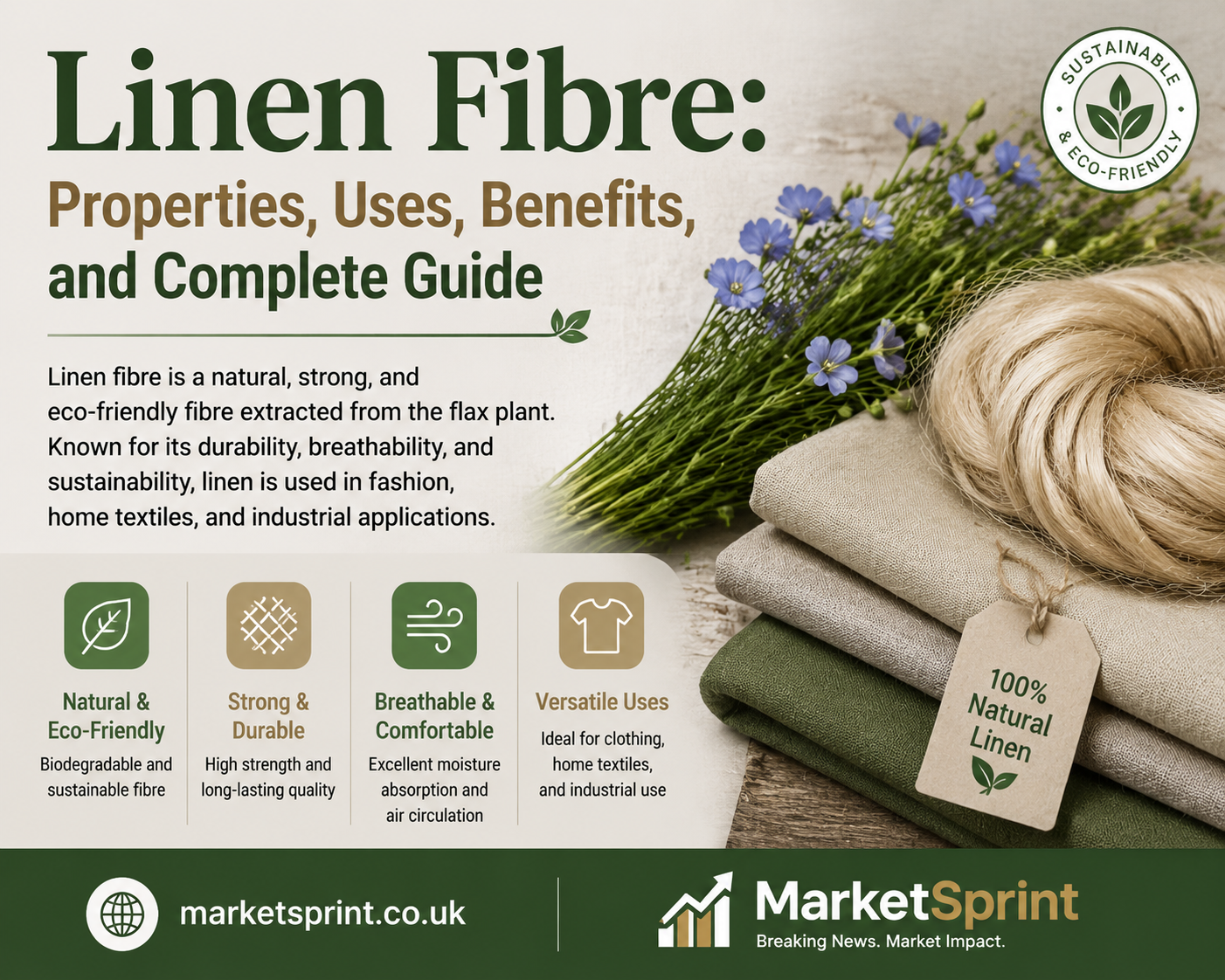
Linen fibre is one of the oldest and most valuable natural fibres in the world. Known for its strength, durability, and breathable texture, linen has been used for thousands of years in clothing, home textiles, and industrial applications. Today, linen is becoming increasingly popular again due to rising demand for sustainable, eco-friendly, and comfortable fabrics.
In this article, we will explore everything about linen fibre, including its origin, manufacturing process, properties, benefits, and modern uses.
What is Linen Fibre?
Linen fibre is a natural textile fibre obtained from the flax plant (Linum usitatissimum). The fibres are extracted from the stem of the flax plant and then processed into yarn and fabric.
Unlike synthetic fibres, linen is completely natural, biodegradable, and environmentally friendly. It is known for its crisp texture, natural shine, and exceptional breathability.
Linen is considered a luxury fabric in many cultures because of its premium feel and long-lasting quality.
Origin and History of Linen Fibre
Linen has a rich history that dates back thousands of years. It is one of the oldest known textiles in human civilization. Ancient Egyptians were among the first to use linen for clothing, mummy wrappings, and household fabrics.
In ancient times, linen symbolized purity and wealth. Because of its high quality and difficult production process, it was often used by royalty and the upper class.
Even today, linen continues to represent elegance and sophistication in the textile industry.
How Linen Fibre is Produced
The production of linen fibre involves several steps, each requiring precision and care:
1. Cultivation of Flax
Flax plants are grown in cool and humid climates. The quality of linen depends heavily on soil and weather conditions.
2. Harvesting
Flax plants are harvested when they turn yellow and seeds are fully developed.
3. Retting Process
This is a crucial step where the stems are soaked or exposed to moisture to separate fibres from the plant stalk.
4. Breaking and Scutching
The dried stems are broken to remove woody parts, and the fibres are separated.
5. Hackling
Fibres are combed to remove impurities and align them properly.
6. Spinning
Finally, the fibres are spun into yarn, which is used to weave linen fabric.
This entire process is labor-intensive, which is one reason why linen fabric is considered premium.
Key Properties of Linen Fibre
Linen fibre has unique characteristics that make it stand out from other natural and synthetic fabrics:
- High durability and strength
- Excellent breathability
- Moisture absorption capability
- Natural cooling effect
- Smooth and slightly textured surface
- Biodegradable and eco-friendly
- Resistant to bacteria and fungus
These properties make linen ideal for both warm and humid climates.
Benefits of Linen Fibre
Linen offers several advantages that make it highly desirable in the textile industry.
1. Comfortable in Hot Weather
Linen allows air to flow easily, keeping the body cool even in high temperatures.
2. Highly Durable
It is one of the strongest natural fibres, making linen clothing long-lasting.
3. Eco-Friendly Fabric
Linen production uses fewer chemicals and water compared to cotton and synthetic fabrics.
4. Hypoallergenic
Linen is gentle on the skin and suitable for people with allergies or sensitive skin.
5. Stylish Appearance
Linen has a natural elegance and slightly wrinkled look that is considered fashionable.
Uses of Linen Fibre
Linen is used in a wide range of industries and products:
Fashion Industry
- Shirts
- Trousers
- Dresses
- Suits
- Summer wear
Home Textiles
- Bedsheets
- Pillow covers
- Curtains
- Tablecloths
Industrial Use
- Canvas
- Rope
- Bags
- Upholstery
Its versatility makes linen a highly valuable material in global markets.
Linen vs Cotton
Many people compare linen with cotton because both are natural fibres. However, there are key differences:
- Linen is stronger than cotton
- Linen absorbs moisture better
- Cotton is softer initially, but linen becomes softer over time
- Linen wrinkles more easily than cotton
- Linen is more eco-friendly in production
Both fabrics have their own advantages, but linen is often considered more premium and durable.
Why Linen Fibre is Eco-Friendly
Sustainability is one of the biggest reasons for linen’s rising popularity. The flax plant requires less water and fewer pesticides compared to other crops. Additionally, every part of the flax plant can be used, resulting in minimal waste.
Linen is also biodegradable, which means it naturally decomposes without harming the environment. This makes it a perfect choice for eco-conscious consumers.
Modern Demand for Linen Fibre
In recent years, linen has made a strong comeback in fashion and interior design. Designers prefer linen for its natural look and breathable quality. Luxury brands are also using linen in summer collections and minimalist designs.
With increasing awareness of sustainability, consumers are shifting toward natural fabrics like linen instead of synthetic materials.
Care and Maintenance of Linen Fabric
To maintain linen products for a long time, proper care is important:
- Wash in cold or lukewarm water
- Avoid harsh chemicals or bleach
- Iron while slightly damp for best results
- Store in a dry place
- Do not over-dry in machines
With proper care, linen products can last for many years.
Conclusion
Linen fibre is a timeless natural material that combines strength, comfort, and sustainability. From ancient civilizations to modern fashion industries, linen has maintained its importance due to its unique properties and eco-friendly nature.
Whether used in clothing, home textiles, or industrial applications, linen continues to be one of the most valuable natural fibres in the world. As sustainability becomes more important globally, the demand for linen fibre is expected to grow even further.
Choosing linen is not just a fashion choice—it is a step toward a more natural and environmentally responsible lifestyle.