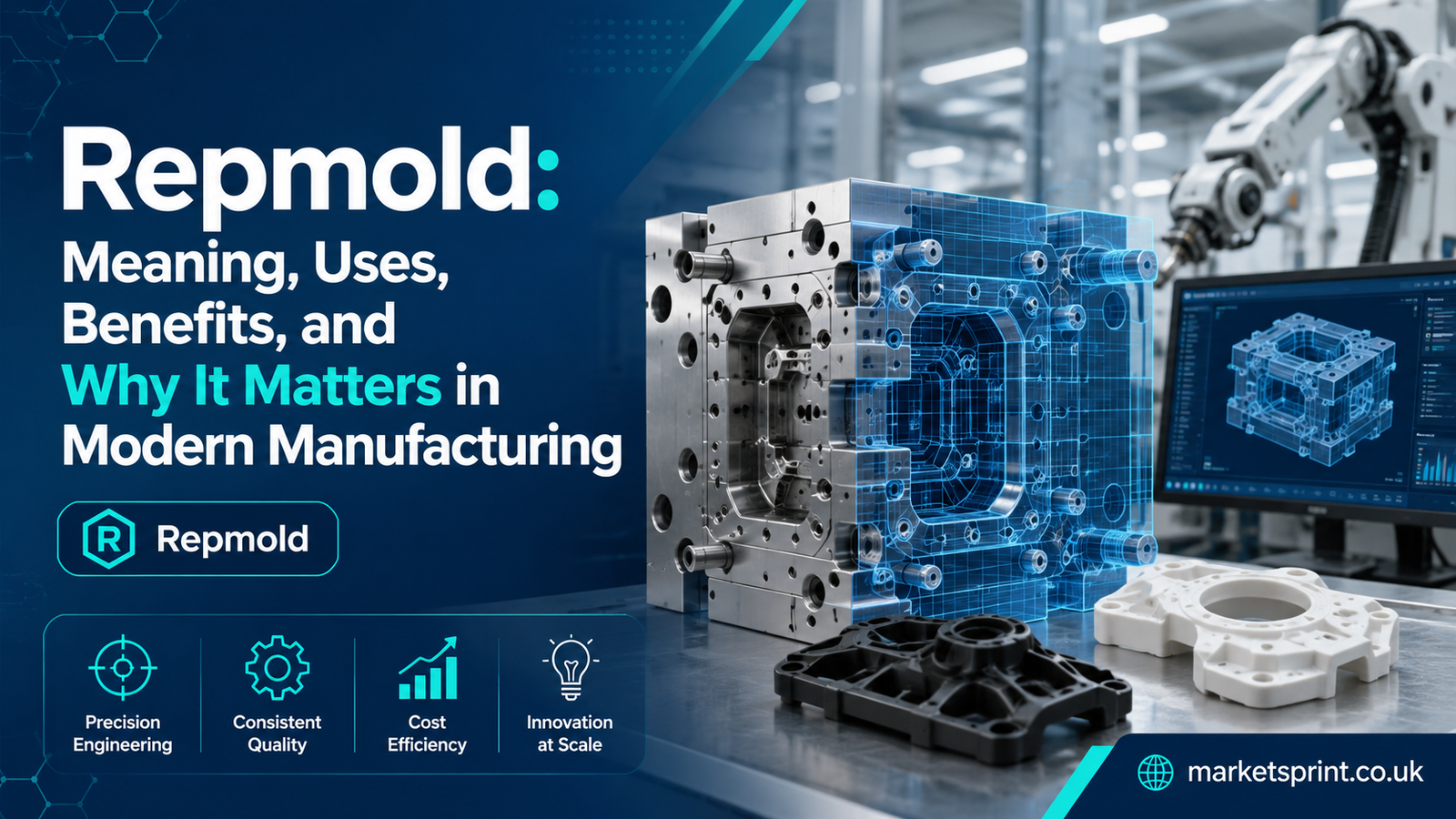
Repmold is becoming an interesting topic in the world of modern manufacturing, product development, and mold replication. As businesses look for faster, more accurate, and cost-effective ways to create products, new methods like repmold are gaining attention. The term is generally connected with the idea of replicating molds, improving mold design, and using digital tools to create accurate parts with less waste and better consistency.
In simple words, repmold can be understood as a modern approach to mold replication and production. Instead of depending only on slow traditional mold-making methods, repmold brings together digital design, precision tools, rapid prototyping, and smart production techniques. This makes it useful for industries that need repeatable shapes, accurate parts, and faster product testing.
Today, speed matters in almost every industry. Whether a company is creating plastic parts, automotive components, medical tools, packaging items, or consumer products, the ability to design and reproduce molds quickly can save both time and money. This is where repmold becomes valuable.
What Is Repmold?
Repmold refers to a process or concept focused on reproducing molds or mold-based parts with accuracy and efficiency. The word can be understood from two ideas: “rep” for replication or repeatability, and “mold” for shaping materials into a specific form.
Traditional mold making often takes a long time because it may involve manual design, testing, corrections, and expensive tooling. Repmold improves this process by using digital design software, 3D models, CNC machining, 3D printing, and other advanced manufacturing methods. These tools help manufacturers create molds that are more precise and easier to repeat.
The main purpose of repmold is not only to copy a shape but to create a reliable and repeatable production method. This means companies can produce the same part again and again with fewer errors. For businesses, this is important because small mistakes in mold design can lead to wasted material, delayed production, and poor-quality products.
How Repmold Works
The repmold process usually starts with a design or an existing object that needs to be reproduced. A digital model may be created using CAD software or 3D scanning. This digital model helps engineers study the shape, size, surface details, and production requirements before the mold is made.
After the design is ready, manufacturers may use rapid prototyping to create a sample. This sample allows the team to test the design before moving into full production. If changes are needed, they can be made digitally, which is faster and cheaper than correcting a finished traditional mold.
Once the design is approved, the final mold can be created using CNC machines, 3D printing, silicone molding, resin casting, or other suitable methods depending on the product and material. The finished mold is then used to produce parts with consistent quality.
This process helps reduce guesswork. Instead of making a mold blindly and fixing problems later, repmold allows manufacturers to test, adjust, and improve the design earlier in the production cycle.
Key Benefits of Repmold
One of the biggest benefits of repmold is speed. In traditional mold making, design and production can take weeks or even months. With digital tools and rapid prototyping, manufacturers can shorten this timeline and bring products to market faster.
Another major benefit is accuracy. Repmold uses digital measurements and controlled production methods, which helps reduce human error. This is especially useful for products that need exact dimensions, such as machine parts, medical components, and electronic casings.
Cost savings are also important. When a company can test a mold before mass production, it reduces the risk of expensive mistakes. Less material is wasted, fewer corrections are needed, and production becomes more efficient.
Repmold also supports customization. Modern customers often want products that fit specific needs. With repmold, companies can create custom molds or modify existing designs without starting completely from zero. This makes it useful for small batches, prototypes, and specialized products.
Sustainability is another advantage. Since repmold can reduce waste and improve material use, it supports more eco-friendly manufacturing. Companies that want to lower production waste may find this approach helpful.
Common Uses of Repmold
Repmold can be used in many industries where molds and repeated shapes are important. In the automotive industry, it can help create interior parts, clips, covers, and prototype components. Car manufacturers often need accurate parts for testing before mass production, and repmold can support that need.
In consumer goods, repmold can be used for plastic products, home items, packaging, tools, and accessories. Many everyday products are made through molding, so improving the mold-making process can improve the final product.
The medical industry can also benefit from repmold. Medical tools and device parts often require high precision. A small mistake in size or shape can affect performance, so accurate mold replication is very important.
In product design, repmold is useful for testing new ideas. Designers can create a sample, review it, improve it, and test again without spending too much money on traditional tooling. This makes innovation easier for startups and small manufacturers.
Repmold and Modern Technology
Repmold is closely linked with modern technologies like CAD, 3D scanning, 3D printing, CNC machining, and automation. These tools make the process faster and more reliable.
CAD software allows engineers to design molds digitally. 3D scanning helps capture the shape of an existing object. 3D printing allows quick sample creation. CNC machining creates precise molds from strong materials. Automation helps maintain consistency during production.
When these technologies work together, manufacturers get a smarter workflow. They can move from idea to prototype and from prototype to production with fewer delays.
Challenges of Repmold
Even though repmold has many advantages, it also has some challenges. The first challenge is the need for skilled workers. Digital design, 3D modeling, and machine operation require technical knowledge. Companies may need to train their team or hire experts.
Another challenge is the initial cost of equipment. Tools like 3D scanners, CNC machines, and advanced software can be expensive. However, for many businesses, the long-term savings may be worth the investment.
Material selection is also important. Not every material works with every mold or production method. Manufacturers need to choose the right material based on strength, flexibility, heat resistance, and final product use.
Future of Repmold
The future of repmold looks promising because manufacturing is moving toward faster, smarter, and more flexible production. As more companies adopt digital tools, mold replication will likely become easier and more advanced.
Artificial intelligence may also play a bigger role in the future. AI can help analyze designs, predict problems, reduce defects, and suggest improvements before production starts. This can make repmold even more efficient.
Small businesses and startups may benefit the most because they often need affordable ways to test products. Instead of spending large amounts on traditional molds, they can use repmold methods to create samples and small production runs.
Conclusion
Repmold is an important concept in modern manufacturing because it combines mold replication with digital technology, precision tools, and faster production methods. It helps businesses create accurate molds, reduce waste, save money, and speed up product development.
As industries continue to demand better quality and faster delivery, repmold can become a valuable solution for manufacturers, designers, engineers, and startups. Whether used for prototypes, custom parts, or repeated production, repmold offers a practical way to improve the mold-making process and support the future of smart manufacturing.