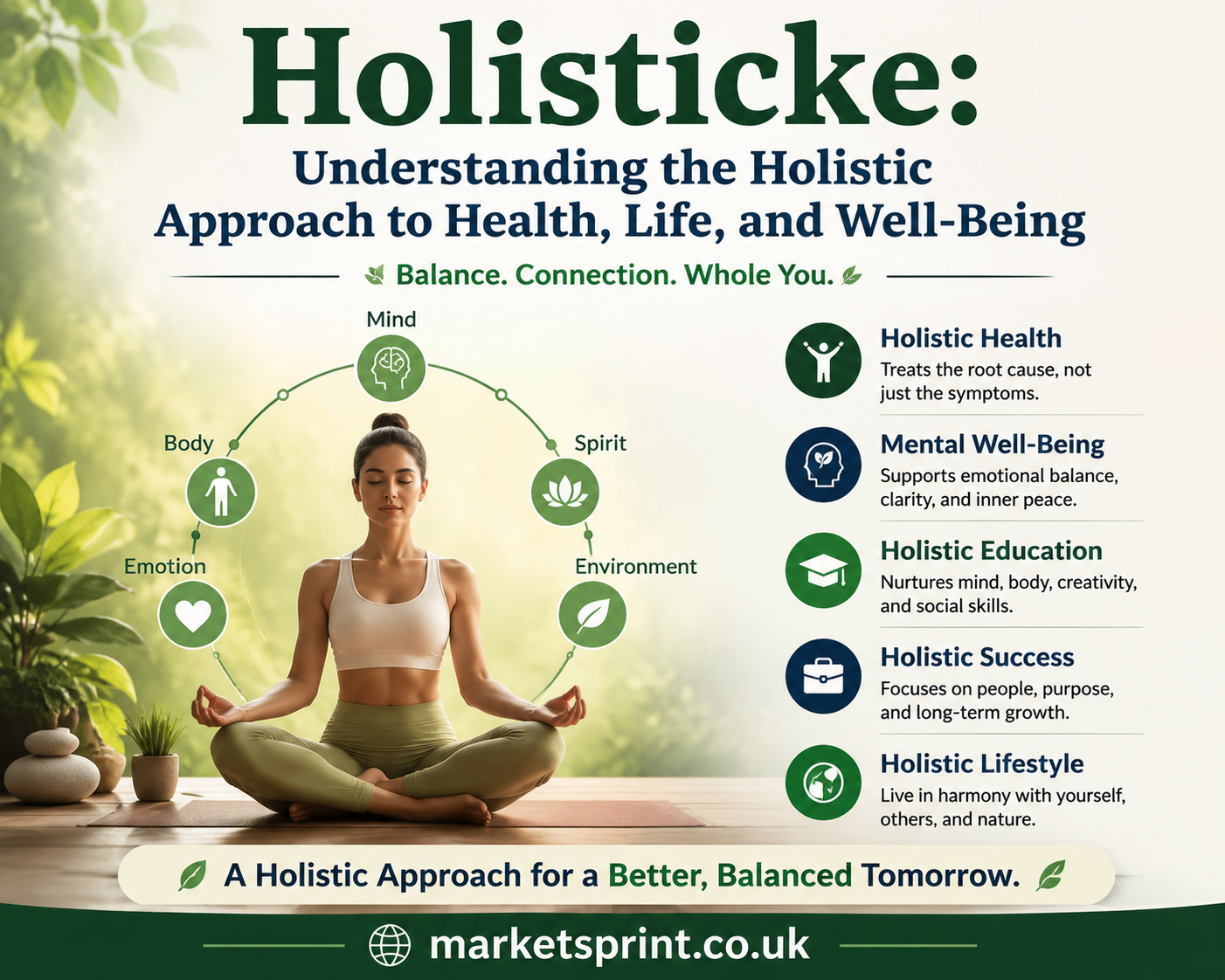
In today’s fast-paced world, people are becoming more aware that true success and happiness cannot be achieved by focusing on only one part of life. This is where the concept of holisticke, commonly understood as a “holistic approach,” becomes important. Holisticke refers to the idea of looking at something as a whole rather than focusing on individual parts in isolation. It is widely used in health, wellness, education, psychology, business, and personal development.
The holisticke mindset is based on balance. Instead of treating symptoms or problems separately, it considers all influencing factors together. This approach helps people make better decisions, improve long-term outcomes, and create harmony between mind, body, and environment.
What Does Holisticke Mean?
Holisticke means understanding something in its complete form rather than breaking it into isolated parts. For example, in healthcare, instead of only treating a disease, a holistic approach looks at a person’s lifestyle, diet, mental health, emotional state, and environment.
The idea is simple: everything is connected. A problem in one area often affects other areas. If someone is stressed, it may lead to poor sleep, which can then weaken the immune system. A holisticke approach tries to identify and improve all related factors instead of focusing on just one symptom.
In English, “holisticke” is closely related to “holistic thinking” or “holistic approach,” which emphasizes complete system awareness.
Holisticke in Health and Wellness
One of the most common uses of holisticke is in healthcare and wellness. Traditional medicine often focuses on treating specific symptoms. However, holistic health goes beyond that. It tries to understand the root cause of illness.
For example, instead of only prescribing medicine for headaches, a holistic practitioner may explore stress levels, sleep quality, hydration, posture, and diet. This broader view helps create long-lasting improvement rather than temporary relief.
Holisticke health also includes mental and emotional well-being. Practices like yoga, meditation, breathing exercises, and natural nutrition are often part of this approach. The goal is not just to cure disease but to create overall balance in life.
People who follow a holistic lifestyle often report higher energy levels, better emotional stability, and improved quality of life.
Holisticke in Mental Health
Mental health is another area where holisticke thinking is extremely valuable. Human emotions are complex and influenced by many factors such as environment, relationships, lifestyle, and past experiences.
A holistic approach to mental health does not only rely on medication or therapy. Instead, it combines multiple methods such as counseling, lifestyle changes, exercise, social support, and mindfulness practices.
For example, someone dealing with anxiety may benefit from therapy sessions, but also from regular physical activity, healthy eating habits, reduced screen time, and improved sleep patterns. All these elements work together to support mental well-being.
Holisticke psychology focuses on understanding the whole person, not just the symptoms of their condition.
Holisticke in Education
Education is not only about memorizing facts or passing exams. A holisticke approach to education focuses on the overall development of a student. This includes intellectual, emotional, social, and physical growth.
In holistic education systems, students are encouraged to develop creativity, communication skills, teamwork, and emotional intelligence along with academic knowledge. Teachers act as guides who help students explore their strengths and interests.
This approach prepares students for real-life challenges by teaching them how to think critically and adapt to different situations. Instead of focusing only on grades, holisticke education focuses on shaping responsible, confident, and well-rounded individuals.
Holisticke in Business and Success
Modern businesses are also adopting holisticke strategies. In business, this means looking at the entire system — customers, employees, processes, environment, and long-term goals.
A company using a holistic approach does not only focus on profit. It also considers employee satisfaction, customer experience, brand reputation, and sustainability.
For example, a business may invest in employee training, better working conditions, and eco-friendly practices. While these actions may not show immediate financial returns, they improve long-term success and brand trust.
Holisticke business thinking helps companies grow in a balanced and sustainable way instead of focusing only on short-term gains.
Holisticke Lifestyle
A holisticke lifestyle means living in balance with all aspects of life. It includes physical health, mental clarity, emotional stability, relationships, career, and personal growth.
People who follow a holistic lifestyle try to maintain harmony between work and personal life. They focus on self-care, healthy eating, regular exercise, positive thinking, and meaningful relationships.
Instead of chasing only money or success, they aim for overall well-being. This approach helps reduce stress, improve happiness, and create a more fulfilling life.
Benefits of Holisticke Approach
The holisticke approach offers many benefits in different areas of life:
- Better Decision Making – It helps people see the bigger picture before making decisions.
- Long-Term Success – Instead of short-term results, it focuses on sustainable growth.
- Improved Health – It supports physical, mental, and emotional well-being together.
- Balanced Life – It reduces stress by creating harmony between different life areas.
- Root Cause Solutions – It addresses the real cause of problems instead of just symptoms.
These benefits make holisticke thinking highly valuable in modern life.
Challenges of Holisticke Thinking
While holisticke approaches are powerful, they also come with challenges. One of the main challenges is that it requires more time and effort. Instead of quick fixes, it focuses on deep understanding and long-term solutions.
Another challenge is complexity. Since it considers multiple factors at once, decision-making can sometimes become more complicated. It may also require lifestyle changes, discipline, and patience.
However, despite these challenges, the long-term benefits usually outweigh the difficulties.
Why Holisticke Matters Today
In a world filled with fast decisions, stress, and constant pressure, holisticke thinking is more important than ever. People often focus only on one aspect of life, such as money, career, or success, while ignoring health, relationships, or mental peace.
Holisticke thinking reminds us that everything is connected. True success is not just about financial achievement but also about physical health, emotional balance, and personal satisfaction.
By adopting this approach, individuals and organizations can create more meaningful and sustainable outcomes.
Conclusion
Holisticke is more than just a concept — it is a way of thinking and living. It encourages people to see the bigger picture and understand how different parts of life are connected. Whether in health, education, business, or personal development, the holistic approach leads to better balance, deeper understanding, and long-term success.
In a modern world full of complexity, holisticke thinking offers a simple but powerful truth: everything matters, and everything is connected.